A Meeting of the Minds: A Forum of Critical Thinking
Join Us for the Truly Unique Experience: Be In The Room When It Happens
Honest, critically important conversations covering essential topics to becoming a better health care provider in orofacial pain, joint dysfunction, headaches, and sleep disorders — covering topics rarely taught or discussed. Incredible people presenting and attending — in a small group setting —
Each Presenter has TWO HOURS for their “topics” — discussion time provides either during or after each presentation — Each presenter will be there all weekend to participate in the discussions with all attendees!
Attendees will receive pre course lit for all topics — and further references will be available to all attendees after the coursse
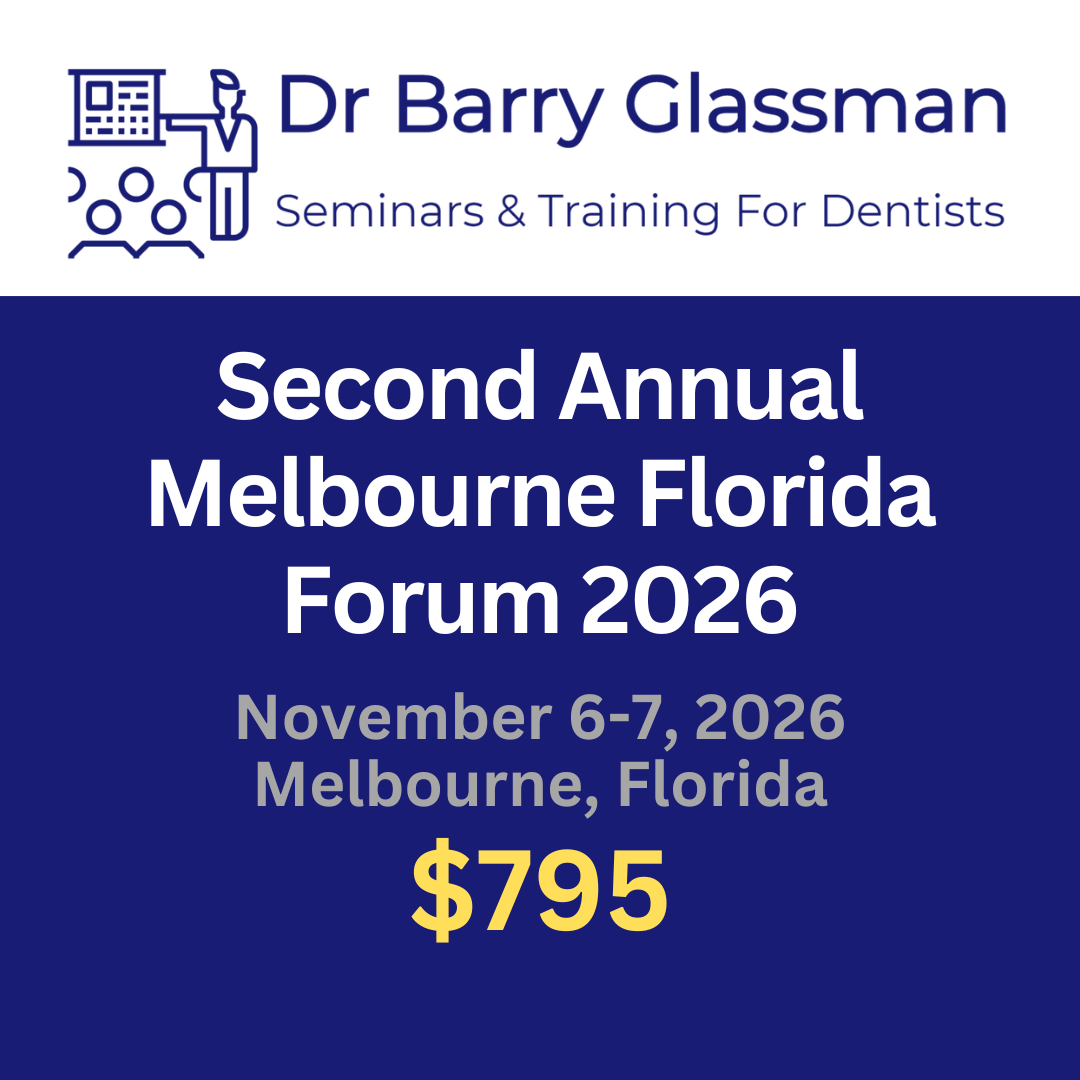
There is a Pre Course Zoom meeting on October 27th at 8 PM Eastern time to introduce the presenters and prepare for the event
All attendees receive a comprehensive information confirmation email upon receipt of their registration
There are currently 20 registrations. We expect no more than 30 in addition to our 7 presenters. Look forward to up close and personal time for more discussions and having questions answered
In addition to breakfast and lunch being included, there will be a dinner at Barry’s home on Friday night for further social and professional interactions!
Speakers Presentation Topics
Dr. Rafi Benoliel: What's in a Name? The Use of "Myalgia" and "Myofascial pain.”
Why does ICOP matter to dentistry, and patients. Our goal was to find the common language to help us finally move toward standards of care that are effectiveWe explore the aims behind classification systems and why precise terminology matters for diagnosis, communication and treatment. Specifically, we examine how the terms "myalgia" and "myofascial pain" are defined and applied in classifications. The development of ICOP involved behind the scenes discussions about the truth about facial pain, specifically about the role of muscle in pain. The battles tell us much about the science.”
Dr. John Viviano: A Critical Look at the “Untoward Effects” of Oral Appliance Therapy
For Dentists that provide oral appliance therapy for Sleep Apnea, there's a clinical finding many providers treat as a red flag — one that's quietly convinced good clinicians to pull good patients off an effective therapy. This talk challenges that instinct head-on, and by the end, you may never interpret what you're seeing in your patients the same way again.
Dr Bob Mier: 1. Wack-a Mole: Misinformation in the Digital Age and the Dangers it Poses
For Dentists that provide oral appliance therapy for Sleep Apnea, there's a clinical finding many providers treat as a red flag — one that's quietly convinced good clinicians to pull good patients off an effective therapy. This talk challenges that instinct head-on, and by the end, you may never interpret what you're seeing in your patients the same way again.
2. “Motivational Interviewing” — A Better Way to Engage with our Patients
How to pursue a relationship with patients that is designed to help solve a healthcare-related problem using patient introspection and empowerment. Typical interactions with patients are often confrontational in nature (this can simply be giving information and trying to explain why something is bad for them) and result in patients resisting treatment either through refusing care or indirectly through non-compliance. MI is a patient-centered approach that focuses on collaboration and helping patients employ change behaviors
Drs. Don Malizia and Barry Glassman: Evolution of the Model for the Diagnosis and Treatment of Trigeminally Mediated Disorders
Our empirical history has led to the structuralism and the dangerous misinformation that often leads to misdiagnosis and unnecessary and often inappropriate treatment. Psychology and psychiatry has a similar biomedical history with the development of the “transorbital prefrontal lobotomy” developed by Dr. Walter Freeman and performed on over 4000 patients until he was banned from performing the surgery in 1967. Through the likes of Marbach, Raphael, Rugh and Dworkin, psychology taught dentistry “how to do science,” and there wasn’t much evidence beyond the biomedical model at that time. The heavy psychological influence led to a Biopsychosocial Model that separated Axis 1 from Axis 2, but emphasized Axis 2. There was a reason that Dr. Raphael suggested that anyone who treated bruxism for trigeminally mediated disorders was “misguided.” The science is more available; and the concept of contributing factors without attempting to create a pseudo separation of Axis 1 and Axis 2 leads to a more comprehensive model.
Dr. Steven J Scrivani: Case Presentations: Common Things Happen Commonly…
Until They Don’t
The presentation challenges attendees to maintain a balanced diagnostic approach. While the adage "common things happen commonly" holds true for statistical probability, the title’s twist—"Until they Don't"—serves as a critical warning: relying solely on probability can lead to missed diagnoses of rare but life-threatening conditions.
Dr. Scrivani uses real-world case histories to bridge the gap between textbook presentations and the complex, often ambiguous reality of patient care. What questions need to be asked? When is imaging important; and when is it not? What is our patient telling us — and how do we learn to look for common but be aware of the uncommon? What are the red flags that should not be missed? Steve’s approach is open and challenging, and is always a course highlight.
Dr. Micah Sadigh:
Dr. Sadigh sets the table for the meeting with his keynote presentation. He is a clinical psychologist who's practiced in an office limited to orofacial pain, joint dysfunction, headache and sleep disorders with Drs. Barry Glassman and Don Malizia. We consider Micah to be the “hidden gem” in the world of orofacial pain and sleep. Micah will review the importance of appreciating the emotional toll that both acute and chronic pain plays on our patient’s quality of life, and how we as dentists are in an amazing position to be able to lead our patients to significant improvements without trying to separate pain and emotional input. He will review the difference between complicated and complexity; and increase our understanding that the role we play can’t be separated neatly into biomedical, social, and psychological buckets. If that understanding suggest we are “swimming upstream” of the science as it tends to be taught, well so be it. What then becomes very important is not WHAT we think, but HOW we think.